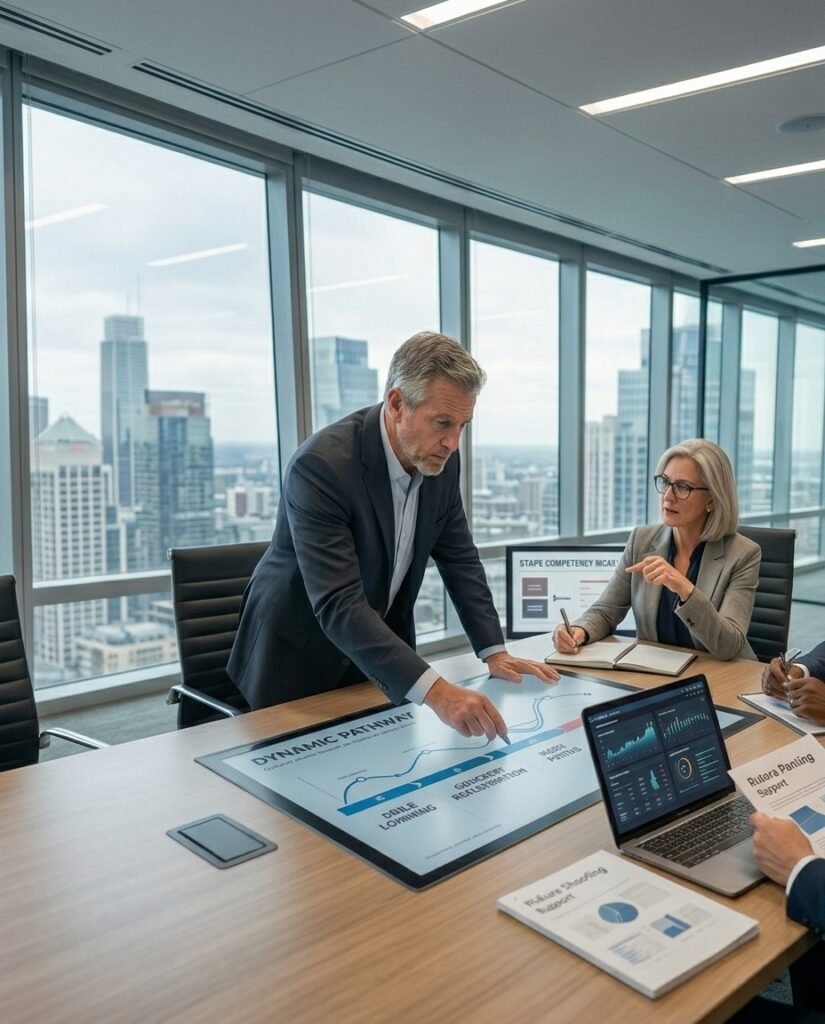
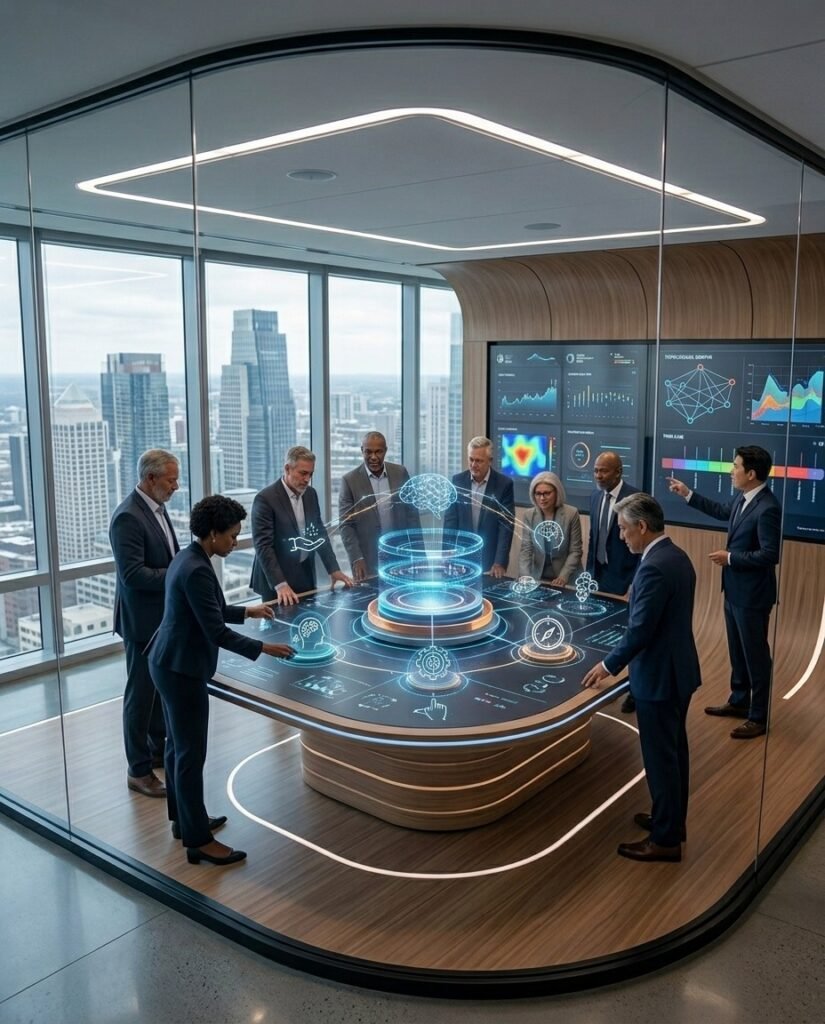
In today’s rapidly shifting global market, relying on fixed business models and static skill sets is a primary risk factor for enterprise longevity. Sustainable market leadership requires moving beyond isolated training programs toward building Adaptive Enterprise Capabilities a holistic system where talent, operational processes, and strategic intent evolve seamlessly together.
Operational Foundation
Dynamic Capabilities vs. Static Competencies
Traditional talent management focuses on static skill sets tailored for current operational needs. While technical proficiency is necessary, it quickly degrades as technology and market demands evolve.
Static Competencies: Focus on executing predefined workflows and operating existing tools.
Dynamic Capabilities: Focus on continuous learning, resource reallocation, and operational restructuring in response to real-time market signals.
By cultivating dynamic capabilities, organizations bridge the gap between strategic vision and real-world execution, ensuring long-term resilience.
The Triad of Capability Architecture
Building scalable organizational capabilities requires aligning three foundational pillars:
Strategic Alignment: Ensuring capability-building initiatives directly support revenue drivers and enterprise OKRs.
Talent Mobility & Upskilling: Establishing flexible cross-functional frameworks that enable talent rotation and continuous knowledge transfer.
Enterprise Infrastructure: Leveraging modern automation and scalable digital tools to remove operational friction and accelerate execution.
Measuring Business Impact Beyond Vanity Metrics
To turn capability development into a quantifiable business driver, leaders must shift from measuring completion rates to tracking strategic agility and operational impact:
Traditional Focus: Training hours logged, attendance, and course completion rates.
Strategic Focus: Time-to-market for new initiatives, cross-functional innovation speed, and internal talent fill rates for strategic roles.
Institutional Commitments
Strategic Insight Summary
Agility Over Stagnation
Sustainable competitive advantage relies on adaptive organizational capabilities rather than static, short-term skill sets.
Structural Alignment
True capability development requires the seamless integration of enterprise strategy, human talent, and modern technology.
Value-Driven Metrics
Organizational growth must be measured by execution speed, adaptability, and time-to-market rather than traditional completion metrics.